Home
Dyslexia service for Lancashire, Yorkshire and Greater Manchester
Welcome to Robbins Specialist Assessment
Robbins Specialist Assessment is a specialist dyslexia consultancy owned and run by Michaela Robbins, a qualified Specialist Teacher and accredited Dyslexia Assessor with extensive experience supporting children and young people with Specific Learning Difficulties. Michaela is committed to providing clear guidance, high-quality assessment, and practical support that makes a genuine difference.
Dyslexia presents uniquely in every individual. Some people may find reading challenging, others may struggle with spelling, memory, processing speed, or organisation. A professional assessment can offer clarity—helping to identify strengths, understand areas of difficulty, and determine what support or adjustments may be most beneficial both in and out of school.
At Robbins Specialist Assessment, I provide a range of services designed to give families and schools the insight they need to help learners thrive. These include:
-
Full diagnostic dyslexia assessments offering a detailed profile of learning strengths and challenges, accompanied by a comprehensive written report and tailored recommendations.
-
Mini assessments to screen for indicators of dyslexia and guide next steps where a full assessment may not yet be necessary.
-
Specialist dyslexia teaching, using evidence-based strategies to build confidence and develop essential literacy and study skills.
-
Exam Access Arrangements assessments to ensure appropriate support is in place for formal examinations.
I work closely with parents, schools, and other professionals to build strong, collaborative relationships that keep the learner at the centre. My aim is to ensure that every child is understood, supported, and equipped with the tools they need to reach their full potential.
What is Dyslexia?
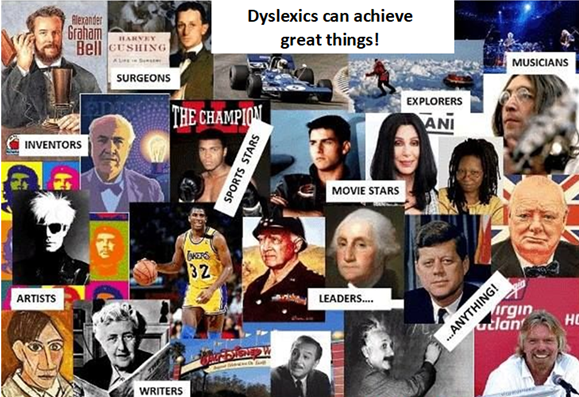
It is estimated that up to one in ten people may be dyslexic, yet many individuals go through school and into adulthood without realising that the difficulties they experience have an identifiable underlying cause. Dyslexia can affect reading, writing, memory, and processing in ways that are often misunderstood, leading people to assume they are simply “struggling” rather than recognising a specific learning difference. With the right assessment and support, these challenges can be better understood, and effective strategies can be put in place to help individuals reach their full potential
Nature
The nature and developmental trajectory of dyslexia depend on multiple genetic and environmental influences.
Manifestation
Dyslexia is a set of processing difficulties that affect the acquisition of reading and spelling. The most commonly observed cognitive impairment in dyslexia is a difficulty in phonological processing (i.e. in phonological awareness, phonological processing speed or phonological memory). However, phonological difficulties do not fully explain the variability that is observed. Working memory, processing speed and orthographic skills can contribute to the impact of dyslexia.
Impact
In dyslexia, some or all aspects of literacy attainment are weak in relation to age, standard teaching and instruction, and level of other attainments. Across languages and age groups, difficulties in reading fluency and spelling are a key marker of dyslexia.
Variance and co-occurrence
Dyslexic difficulties exist on a continuum and can be experienced to various degrees of severity. Dyslexia can affect the acquisition of other skills, such as mathematics, reading comprehension or learning another language. Dyslexia frequently co-occurs with one or more other developmental difficulties, including developmental language disorder, dyscalculia, ADHD, and developmental coordination disorder.
Carroll, J., Holden, C., Kirby, P., Snowling, M. J., & Thompson, P. A. (2025) Journal of Child Psychology and Psychiatry.
 Specialist Assessment